
Reader asks 'what is the #1 video game of all time?'
There isn't one answer, and that's not a dodge — it's a fact about how these lists get built. Ask five outlets for the single best video game ever made and you'll get five different names, because "best" is doing different work on each list, even when the lists look superficially identical: a ranked column of titles, a number next to each one, a headline promising a definitive order.
Some rankings are aggregate-driven: they pull from professional review scores compiled across outlets, the way Metacritic and OpenCritic do, and the #1 slot goes to whatever holds the highest average once enough reviews have accumulated. That average is sensitive to how many outlets reviewed a title and when — a niche release with five glowing reviews can sit above a blockbuster with two hundred mixed ones, simply because of how the math handles sample size. Others are staff picks — a site's writers vote or argue their way to a list, which is closer to what Seasoned Gaming's favorites list and Rolling Stone's ranking are doing. A third type is mathematically derived, combining multiple existing lists or data sources into a single composite order rather than starting from scratch, which smooths out any one outlet's idiosyncrasies but also erases the reasoning behind any individual placement.
None of these methods is wrong. They're answering different questions dressed up as the same question. A critic-aggregate list is telling you which game was most consistently well-reviewed on release. A staff-vote list is telling you what a specific group of writers, often with stated personal history with the games, still loves years later. A derived list is telling you what the collective judgment of many separate lists lands on when you flatten them into one — useful for spotting consensus, less useful for understanding why any single game earned its spot.
Before treating any list's #1 as settled, it's worth checking which of the three it is:
| Method | What it actually measures | Where you'll see it |
|---|---|---|
| Aggregate critic score | Average review score across outlets at/near launch | Metacritic, OpenCritic |
| Editorial staff vote | A specific group's collective taste, argued out | Seasoned Gaming, Rolling Stone |
| Mathematically derived | Composite of other lists or data points | Cross-outlet "greatest of all time" rankings |
Wikipedia's own running compilation of games listed among the best is useful precisely because it shows the overlap: a handful of titles show up across nearly every methodology, which is a better signal of lasting quality than any single #1 slot. If a game clears aggregate score, staff vote, and composite ranking all at once, that's the closer thing to consensus. If it only tops one type of list, you're looking at that method's particular bias, not a universal verdict — and it's worth asking, before repeating the claim, which of the three produced it.
There's a fourth number worth separating from all three: the audience score sitting next to the critic score on the same page. Aggregators like Metacritic and OpenCritic publish critic and user scores side by side precisely because they diverge, sometimes sharply, on the same game. A polarizing sequel or a controversial ending can tank the audience number while the critic average stays high, or the reverse — a game critics found derivative can carry a loyal player base that rates it far above the professional consensus. Neither number cancels the other out; they're measuring different reactions from different populations at different moments (critics mostly at launch, players on an ongoing basis, sometimes years afterward as opinions settle or shift), and a list that quietly picks one over the other without saying so is making an editorial choice it isn't naming. If a list's methodology page doesn't specify whether it's using critic or user data, that omission is itself worth noticing before you treat the ranking as authoritative.
Reader asks for the 'top 10 most played' games

If you're asking this, you want sales figures or active-player counts, and critic-score lists won't get you there. A game topping a review-aggregate ranking and a game topping a most-played ranking are frequently not the same title, because the two questions measure different things: one measures how good reviewers thought a game was, usually clustered around its release window; the other measures how many people bought it, downloaded it, or kept coming back to it months or years later.
This mismatch matters because "best" lists — the kind built on Metacritic or OpenCritic score aggregation, or on editorial judgment like GQ's expert-ranked list — are not tracking units sold or concurrent players. A critically adored narrative game can have a fraction of the install base of a free-to-play multiplayer title that critics barely bothered reviewing, because review aggregation sites weight critical reception, not commercial reach or ongoing engagement. A game that never cracks a top-10 critic list can still be one of the most-played games on the planet, and a game that tops every critic list can be a title relatively few people ever finished.
User/player scores sit closer to this second question than critic scores do, since they reflect people who actually kept playing rather than a reviewer's assessment on a launch-week build, but even a high user score isn't a player count — it's still a rating, not a measure of how many people are logged in on a given night. A game can hold an excellent user score from a small, devoted base and still rank nowhere near the top of any actual player-count chart. Conflating "rated highly by the people who play it" with "played by a lot of people" is one of the more common mistakes in reading these lists side by side.
So the practical split is:
- Want quality signal → use critic-aggregate scores (Metacritic, OpenCritic) or editorial "best of" lists.
- Want audience reaction over time → check the user/player score alongside the critic score, and note when the two diverge sharply.
- Want popularity or reach → look for sales figures and active-player data, which live outside review-score sites entirely and are usually reported by the platform holder or publisher rather than a review outlet.
- Want all three → treat them as separate lookups. A game appearing high on critic score, user score, and sales charts at once is rare enough to be notable when it happens, and worth naming specifically when it does.
The PAA box that asks for "top 10 best" and "top 10 most played" in the same breath is really asking two unrelated questions. Review-score lists were never built to answer the second one, and treating a Metacritic-style ranking as a proxy for popularity will consistently mislead — not because the ranking is wrong, but because it was never measuring what the second question is asking for.
A franchise such as Zelda, Mario or Metal Gear appears on nearly every list
These franchises show up everywhere because the justification isn't really about a single score — it's about influence, and increasingly about genre placement, too. Lists frequently sort or balance their picks by genre — action, adventure, RPG, horror — before ranking within each bucket, which is one reason the same handful of franchises resurface: a list that wants to represent "adventure" alongside "RPG" alongside "horror" will often reach for the title in each genre with the strongest influence claim rather than purely the highest score, which pushes canonical franchise entries to the top of their category almost by construction rather than by a fresh reassessment each time.
When The Legend of Zelda: Ocarina of Time or Breath of the Wild lands near the top of a list, the write-up almost always cites what the game changed about how later games were designed, not just how it played on release. That's a different axis than launch-day critical reception. A title can score well at launch and still fade from "best of" conversations a decade later if nothing that came after it borrowed from its structure. Conversely, a game whose launch reviews were merely strong can climb in retrospective standing once its ideas — an open-world traversal system, a stamina mechanic, a stealth loop — become the template other studios copy across an entire genre. GQ's expert-compiled ranking and Rolling Stone's list both lean on this kind of framing, describing characters and systems alongside score rather than in place of it, which is a tell that the placement is doing influence work, not just repeating a launch-week review score.
This gives a reader a usable filter, and genre is part of it. When judging whether a game some list has enshrined actually deserves the reputation, it helps to ask three separate questions instead of one:
- Did it score well critically at the time, on its own terms, against the games it actually competed with?
- Did later games in its genre visibly borrow its systems — its combat loop, its map structure, its pacing, its UI conventions?
- Is it being ranked as the best example of its genre specifically, or as a best-ever pick regardless of genre — because those are different bars to clear, and a list that blurs them is making a bigger claim than it's defending?
A game that clears the first two is doing what the lists mean when they call something influential. A game that only clears the first is a well-reviewed release that didn't reshape its genre — still worth playing, still worth recommending, just not deserving of the "greatest ever" framing on influence grounds alone. It also matters whether the list is really ranking one game or an entire series: when Mario, Zelda, or Metal Gear keep reappearing across entries, the write-up is frequently crediting the franchise's accumulated design lineage rather than isolating one installment, and it's worth noticing which of the two is actually being claimed — and whether it's being claimed at the level of "best RPG" or "best game, full stop" — before assuming any single entry earned that slot entirely on its own. A franchise's tenth installment sitting near the top of a list is sometimes really the franchise's reputation carrying that entry, not a fresh judgment of that specific game against its year's competition.
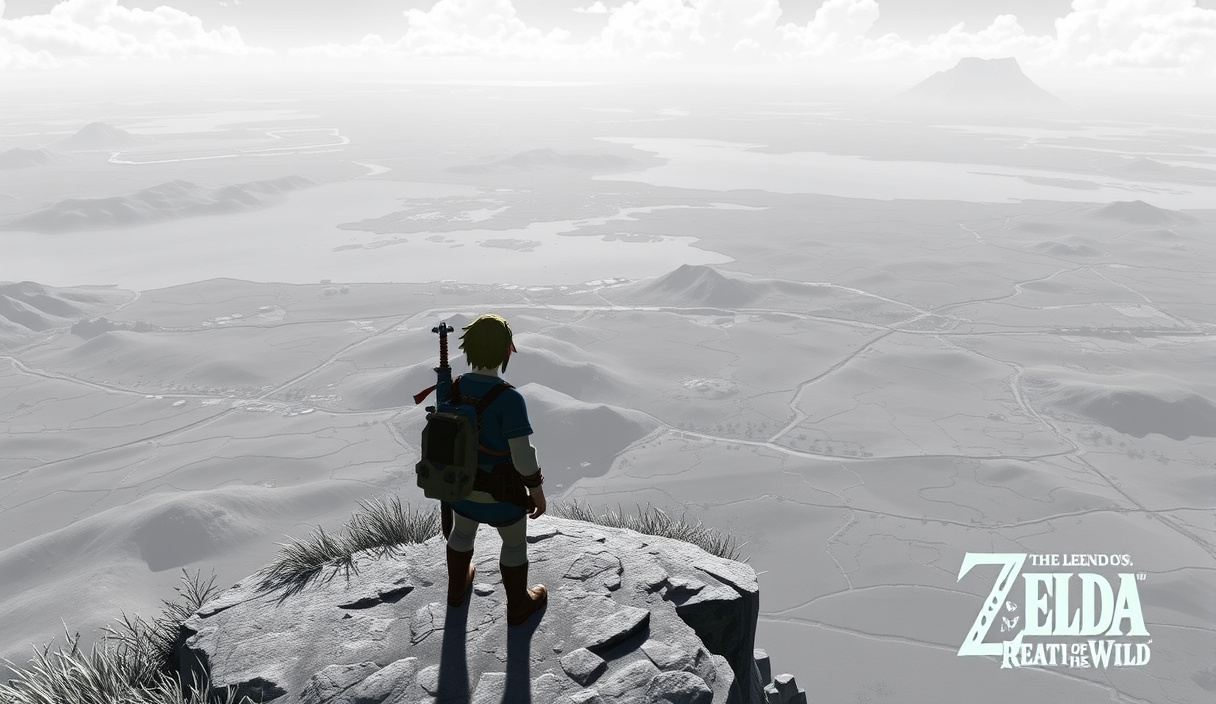
Recent open-world titles like Breath of the Wild and Red Dead Redemption dominate the top of modern lists
This is recency bias, and it's rarely named even though it visibly shapes where these lists land. Open-world titles from the last decade — Breath of the Wild, Red Dead Redemption and its sequel — cluster near the top of current "greatest ever" rankings partly because they're excellent, and partly because they're being judged against the production values, control schemes, and design conventions of the current console generation, a moving standard that older games were never built to meet.
Older canonical titles get compared against that same modern yardstick, which structurally disadvantages them. A game built for hardware limitations from two console generations back didn't have the option of seamless open-world traversal, voice-acted side content, or modern camera conventions — so a straight side-by-side against a current release makes it look primitive in ways that say nothing about how it stood relative to its actual competition at launch. Lists get rewritten as new games ship, which is expected and even correct — a list that never updates isn't doing its job — but it means the upper end of any "best of all time" ranking skews toward whatever the last five to ten years produced, not toward a stable historical judgment that would hold steady regardless of when you checked it.
The fix isn't to distrust modern entries — Breath of the Wild appears repeatedly across the compiled overlap of critical, editorial and staff-pick lists tracked on Wikipedia's list of games cited among the best, which is a reasonable stand-in for "documented across more than one methodology" rather than a single outlet's opinion. The fix is comparing a game against its own console generation before assuming a cross-era ranking is telling you something final and permanent. A late-1990s or early-2000s title stacked against its actual contemporaries — checked through period-appropriate aggregate scores rather than a current top-10 built around modern comparison points — often holds up far better than its position on a 2020s-dominated list suggests.
This matters practically for two different readers. Someone deciding whether an older, lower-ranked title is worth their time gets a truer answer from a generation-matched comparison than from its position on a composite modern list, since the composite list is really answering "best judged by today's expectations," a narrower and more time-bound claim than it sounds. Someone trying to gauge a brand-new release's staying power should be equally cautious in the other direction: a game debuting near the top of this year's rankings is being measured against this year's competition and hasn't yet been tested against whatever the next decade of open-world design produces. Both cases call for the same discipline — checking what a list is actually holding constant before accepting what it's claiming to prove.
Pick one list type that matches what you actually want — aggregate score for critical consensus, user score for audience reaction, staff picks for curated taste, or sales data for popularity — and check a candidate game against its own console generation before ruling it out.