Early games rarely featured women as leads
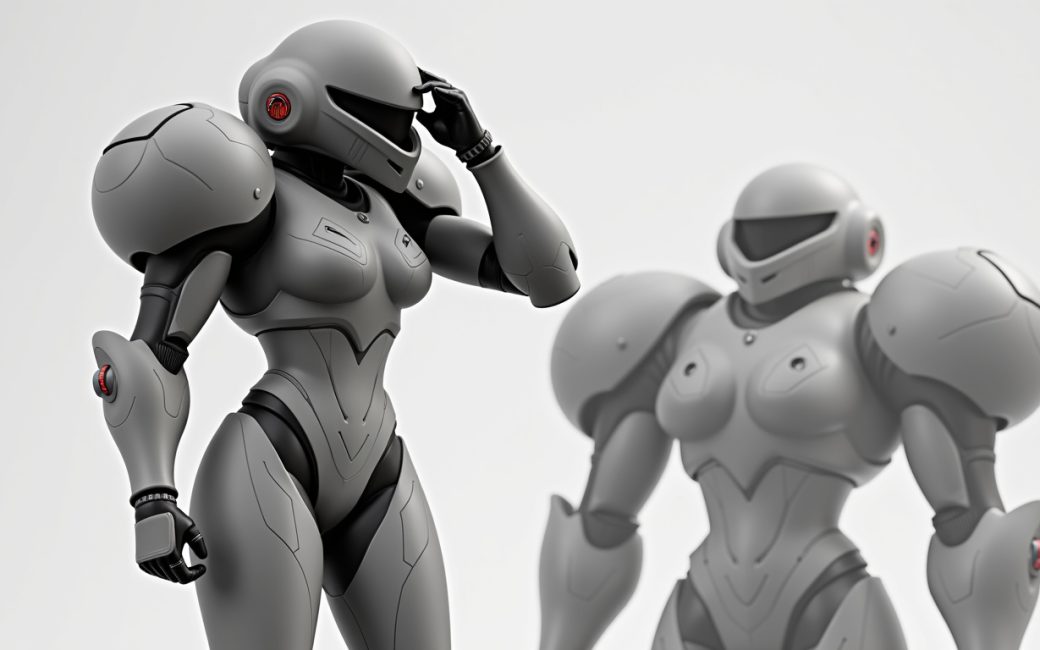
Video games in the medium's early decades mostly cast women as background figures or rescue objects, not as the character a player controlled. When a female lead did appear, she often arrived without fanfare, or as a twist rather than a marketing point. The clearest example is also the field's most frequently cited character: Samus Aran, the bounty hunter of Metroid.
Metroid's ending reveals that the armored protagonist, whom players had spent the whole game assuming was male, is a woman — visible only once the helmet comes off. That reveal is the reason Samus keeps showing up at the top of character rankings, including a list that ranks her among the ten most beautiful women in gaming and a longer countdown that treats her as one of the fifty greatest female characters in video game history. Neither list is judging her on the same terms — one is about looks, the other about historical weight — but she clears both bars for the same underlying reason: the design choice itself was the statement, not her appearance.
That's worth separating from character quality. Samus isn't ranked first because of dialogue, a arc, or a distinctive personality — for much of the original games she barely speaks. She's ranked first because she reframed what "protagonist" could mean in a medium where that wasn't yet assumed. Later entries get judged on writing and characterization; Samus set the precondition those later entries needed. Any list that puts her at number one is really scoring influence, and readers comparing her against a modern, dialogue-heavy lead are comparing two different kinds of achievement.
Lara Croft's original design is built around exaggerated proportions and marketing imagery
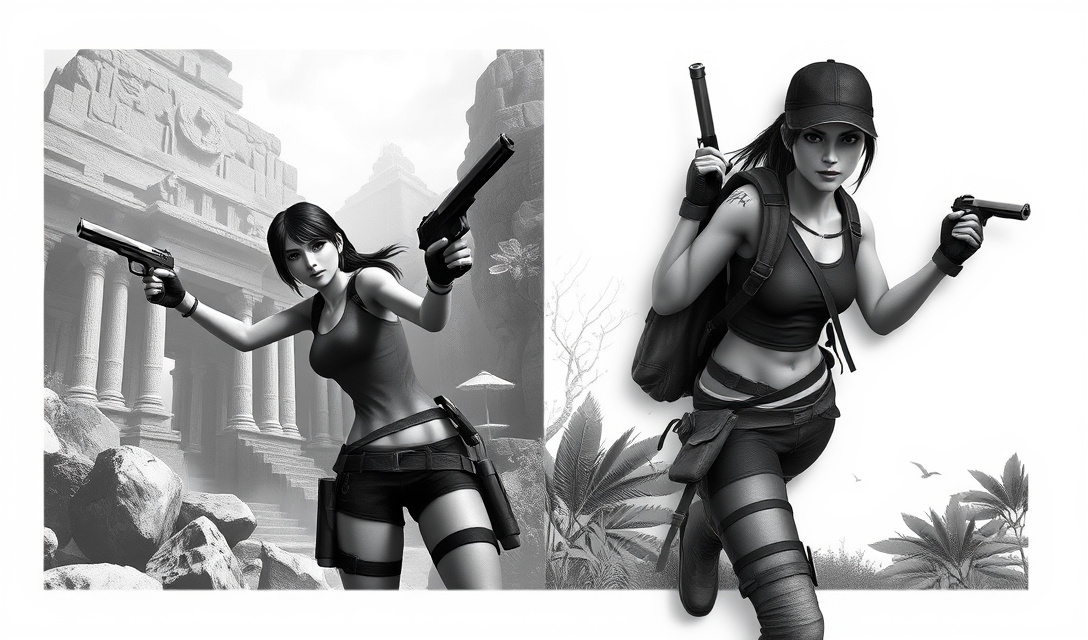
Lara Croft is the other character almost every ranking includes, and she illustrates the opposite problem from Samus: too much information about her, spread across two eras that get folded into one entry. The original Tomb Raider character was built around an exaggerated figure and promoted through pin-up-style marketing, which is exactly why she appears on lists explicitly organized around appearance, including a ranking of the most beautiful women in gaming and a longer, unranked accounting that stretches to a hundred female characters.
But Lara also shows up on lists explicitly about strength and agency, such as one covering twelve powerful female video game characters — a framing the original design wasn't built to earn on its own terms. The tension resolves once you separate the character by version. The Tomb Raider reboot changed her proportions and rebuilt her story around survival rather than spectacle, giving later Lara a different case to make: not "does she look striking" but "does she hold up under a story about endurance and improvisation." A single ranking spot can't hold both cases at once, which is why lists that don't specify which Lara they mean end up implicitly grading an amalgam nobody actually played.
The practical fix, for a reader trying to make sense of contradictory rankings, is to ask which version a list is scoring before accepting its placement. A character who ran for decades under one name accumulated more than one design brief, and treating those as interchangeable is how "beautiful" and "powerful" rankings end up with the same name in different positions for reasons that look arbitrary but aren't.
A reader asks which games have a female main character
Games with a female lead split into two structures, and the difference changes what kind of character you're getting. Some titles ship with a fixed female protagonist built specifically for her — Tomb Raider and Metroid both work this way, with a story, voice, and design built around one specific woman. Other games let the player choose the protagonist's gender, with Mass Effect's Commander Shepard as the standard example: the same plot and role, playable as either a man or a woman, with the writing largely gender-neutral rather than built around a woman's specific perspective.
That distinction matters more than most rankings acknowledge, because it changes what "female protagonist" is actually promising:
- Fixed female lead — the character, backstory, and voice performance are written for a woman specifically; Lara Croft and Samus Aran fall here, and so do several Resident Evil leads such as Jill Valentine and Claire Redfield, cited across multiple character rankings.
- Player-selectable lead — the underlying role is gender-neutral by design; Mass Effect's Shepard is the standard case, meaning the "female version" is one valid playthrough rather than the character's fixed identity.
- Ensemble with mixed leads — series like Final Fantasy rotate protagonists and major party members across entries, so "does it have a female main character" depends on which specific game in the series is meant, not the franchise as a whole.
A reader who wants a story actually centered on a woman's perspective should look toward the fixed-lead category. A reader indifferent to that distinction, but curious what a female playthrough of a broader story feels like, gets a perfectly good answer from the selectable-lead category — it's just a different kind of answer, and lists that group both under one heading blur a distinction the games themselves built in deliberately.
It's also worth separating the fictional question from a genuinely different one. Searches sometimes drift toward "top female gamers," but that's a question about real competitive players and streamers, not about characters written into a game's script — a different subject with its own rankings and record of tournament results, not something answered by any character list.
Ranked lists state no selection criteria
The most common flaw across character rankings is silence about what's being measured. A list titled "greatest" or "best" sits alongside a list titled "most beautiful" and a list titled "most powerful," and readers are left to assume they're roughly interchangeable — one countdown of nineteen favorite characters, for instance, mixes personal favorites with characters chosen for combat ability, narrative depth, and visual design without separating those axes, which is typical of the format rather than a flaw unique to one list.
The result is that the same character can appear near the top of one list and mid-table on another with no way to tell whether that's a disagreement about her writing or simply a different question being asked. A top-seven list built around personal favorites and a much longer crowd-compiled ranking of a hundred characters will naturally disagree — one is a curated argument, the other an aggregate of many opinions — but neither states that difference up front, so a reader comparing the two assumes they're measuring the same thing.
A more usable ranking states its criterion before the list starts, and holds every entry to that one standard:
| Criterion | What it actually measures | Example framing |
|---|---|---|
| Appearance | Visual design, marketing imagery | "Most beautiful" lists |
| Agency / capability | In-story power, competence, combat role | "Most powerful" lists |
| Narrative depth | Writing quality, arc, characterization | "Greatest characters" lists |
| Historical influence | Impact on what the medium considered possible | "First," "most groundbreaking" framings |
None of these criteria is wrong to rank by. The failure is combining them silently — putting Samus Aran, ranked mostly on historical influence, in direct competition with a character ranked mostly on writing quality, as though the two scores were measuring the same thing. A ranking that names its own criterion, the way a curated list of "powerful" characters at least gestures toward by titling itself around one trait, gives a reader something they can actually agree or disagree with. A ranking that doesn't name its criterion is just an opinion dressed as a measurement.
If you're building your own list, or checking someone else's, start by writing down which of those four questions you're actually asking — then rank within it, rather than across all four at once. That single step resolves more disagreement than any individual character placement does.