Early games rarely featured women as leads
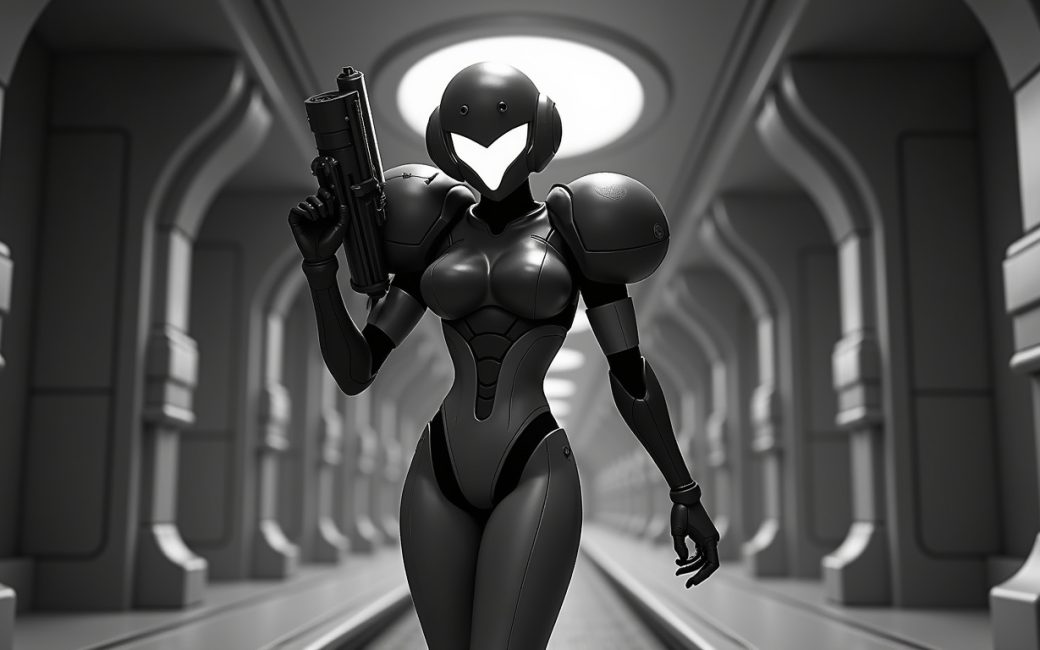
For most of the first two decades of console and arcade gaming, the player-controlled lead was assumed to be male by default, with women cast as background characters, rescue objectives, or absent entirely. That made the ending of the original Metroid a genuine surprise: finish the game quickly enough and the armored bounty hunter piloting the suit removes the helmet to reveal Samus Aran, a woman.
The reveal has become the reference point for nearly every "first female protagonist" discussion in gaming, cited repeatedly across character rankings that otherwise disagree on almost everything else. Samus shows up near the top of lists built around appearance and lists built around historical significance, which is really two different rankings sharing one name. Her armor conceals her body for the vast majority of playtime, so any claim about her ranking on looks is really a claim about a handful of cutscenes and alternate endings, not about the character as she's played.
That's worth separating out plainly: Samus ranks first on influence, not on appearance, and treating those as the same criterion is where a lot of these lists start to blur. A reader looking for the origin story behind why one character dominates every list benefits from knowing which claim is actually being made — that she existed early and mattered, not that she was designed to be looked at.
Lara Croft's original design is built around exaggerated proportions and marketing imagery
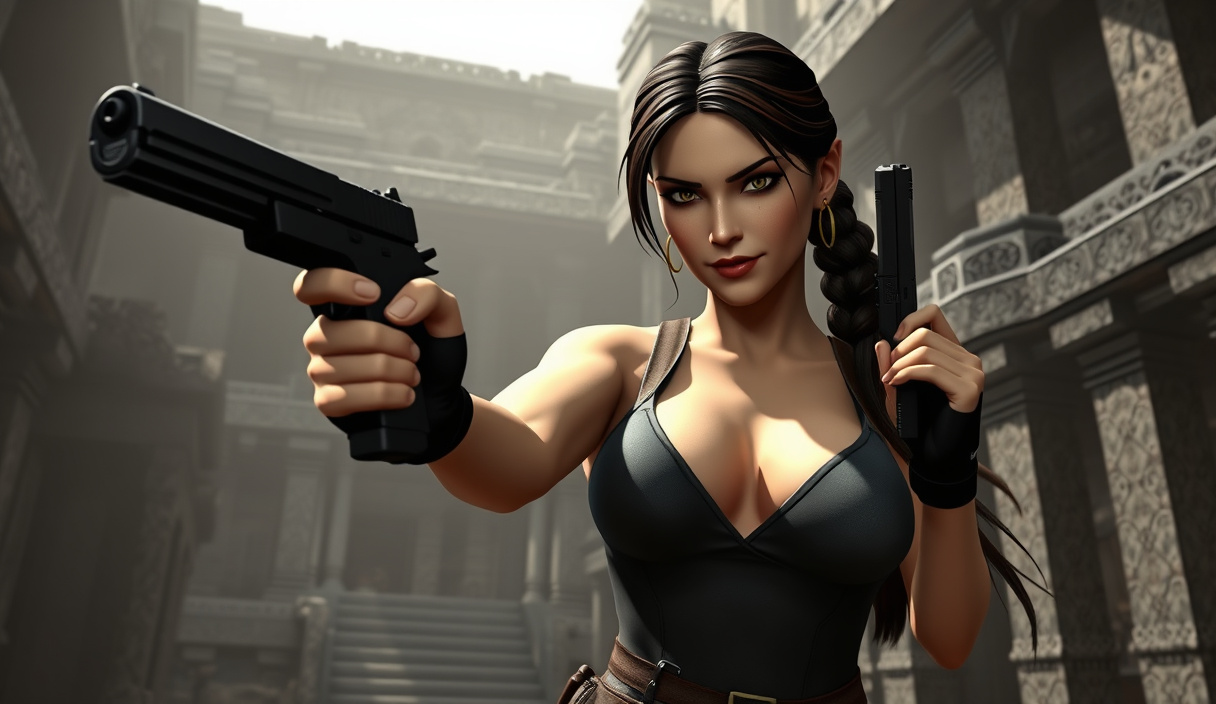
Lara Croft's original polygon model and the marketing that surrounded it were built around exaggerated proportions, and that's the version most "hottest" lists are actually describing, whether or not they say so. Rankings that put her on a "beautiful women" list and rankings that put her on a "powerful women" list are frequently talking about two different design eras of the same name, which is why the placements contradict each other from one page to the next.
The Tomb Raider reboot changed that substantially: Lara Croft was recharacterized with more realistic proportions and a story built around survival rather than spectacle. That version of the character can reasonably be judged on writing, on the arc of a young woman forced into violence she didn't choose, rather than on the marketing imagery that defined the 1990s model. Lists that fold both versions into a single entry — as most currently do — are averaging two different characters and calling the result one ranking.
The fix for a reader trying to make sense of these lists is simple: ask which version of Lara Croft is actually being described before accepting a placement. A ranking built on the original model's proportions and a ranking built on the reboot's storytelling are not the same claim, even when they use the same name and the same number.
| Version | Design basis | What it can be ranked on |
|---|---|---|
| Original Tomb Raider era | Exaggerated proportions, marketing imagery | Appearance-based lists only |
| Rebooted Tomb Raider | Realistic proportions, survival narrative | Writing, character arc, agency |
A reader asks which games have a female main character
The honest answer splits into two categories: games that ship with a fixed female lead, and games where the player chooses. Tomb Raider and Metroid belong to the first group — Lara Croft and Samus Aran are the protagonist regardless of who's holding the controller. Mass Effect belongs to the second — Commander Shepard's gender is a player choice, so the female version exists alongside a male version rather than as the only option.
That distinction matters more than most lists acknowledge, because it changes what the story is actually built to do. A fixed female lead means the writing team built the narrative, dialogue, and relationships around a specific woman's perspective from the start. An optional lead means the writing has to work whether the player picks a man or a woman, which typically produces a more gender-neutral script with swapped pronouns and voice lines rather than a story rooted in one character's specific experience.
For a reader trying to find games with a female main character, the useful filter is this:
- Fixed female lead, story written for her specifically — Tomb Raider's Lara Croft, Metroid's Samus Aran
- Optional lead, gender-neutral writing — Mass Effect's Shepard, and similar games where character creation includes a gender toggle
- Ensemble cast with recurring female characters, no single lead — Resident Evil and Final Fantasy, both of which are repeatedly mined for individual character entries on ranking lists rather than offering one protagonist to point to
Filtering by that split answers the "which games have a female main character" question more usefully than a flat list of names, because it tells the reader what kind of game they're actually getting into before they buy it.
Ranked lists state no selection criteria
Most published rankings of appealing female video game characters mix appearance-based entries and agency-based entries in the same list without saying which standard produced which placement. A ranking of gaming's ten "hottest" female characters and a list of the "most stunning" female characters are both organized around appearance by their own titles, which at least makes the criterion legible even if the ranking within it is subjective. Neither page states why one entry outranks the next beyond the writer's own preference, which is common across this kind of list: the title supplies a category, but not a method.
The practical problem is that a reader can't tell why one character outranks another on any given list, because "hottest," "most beautiful," and "greatest" are treated as interchangeable words for the same quality. A character who ranks highly because she's iconic and one who ranks highly because of her design in a single cutscene end up on the same numbered line, with nothing distinguishing the reasoning behind either placement.
The fix is to state the criterion before ranking anything within it:
- Appearance-based — model design, animation, marketing art; judged per game version, not per franchise
- Agency-based — narrative role, decision-making, arc across a game or series; largely independent of visual design
- Cultural influence — how often a character is cited as a "first" or a genre touchstone, distinct from either of the above
A ranking built on one of these three, stated plainly, is defensible in a way that a blended list isn't. It also resolves the recurring confusion around characters like Lara Croft, whose two major design eras produce contradictory placements precisely because writers keep ranking "Lara Croft" as one entity across appearance and agency criteria that point in different directions.
It's also worth separating fictional characters from a related but different question: "top female gamers" refers to real streamers and competitive players, a subject entirely apart from character rankings and one that gets folded in by search engines more often than by any actual article. Anyone looking for real players should search that specifically, not expect it answered inside a character list.
If you're building your own shortlist, start by picking one criterion — looks, writing, or influence — write it at the top of the list, and only then start ranking names underneath it.