
Reader asks 'what is the #1 video game of all time?'

Ask this question on five different lists and get five different answers, and none of them is wrong. The disagreement isn't sloppiness — it's a sign that "best" is being measured with different rulers, and each list is transparent about its ruler if you look for it.
A Metacritic-style ranking sorts games by aggregated professional review scores, so its top spot is whichever release critics scored highest at launch, averaged across dozens of outlets. An editorial staff list, like the one Seasoned Gaming published from its writers' personal favorites, reflects taste and nostalgia as much as any numeric score — there's no aggregation happening at all, just a group of people arguing until they agree on an order. IGN's approach is different again: rather than voting internally, it built a list mathematically derived from combining many existing rankings and data sources into one composite order, which tends to reward games that show up consistently across sources rather than games that scored a perfect 10 once.
Other formats split the difference. Rolling Stone's list and Punished Backlog's both read as editorial judgment calls dressed as countdowns, weighing cultural impact alongside quality rather than running a formula. None of these is more "correct" than another — they're answering slightly different questions that all happen to be phrased as "the best video game of all time."
Before treating any single #1 as settled, check which method produced it:
| List type | What it optimizes for | Where nostalgia or influence sneaks in |
|---|---|---|
| Aggregate critic score | Review consensus at launch | Barely — but older games were reviewed on older curves |
| Editorial staff vote | Writers' collective taste | Heavily — personal history shapes rank |
| Mathematically derived | Consistency across many lists | Moderately — favors games everyone already agrees on |
If you want a number that reflects contemporary critical reception, use an aggregate. If you want a read on what shaped the medium, an editorial or derived list will tell you more, even if its #1 feels like an opinion rather than a measurement.
Critic scores and player scores rarely match
There's a fourth ruler worth naming separately, because it's the one most likely to contradict the other three on the exact same game: the audience score. Sites that publish both a critic aggregate and a separate user rating routinely show the two diverging by several points, sometimes enough to flip which of two games looks "better" depending on which number you read. Metacritic is the clearest example of this structure in practice — it displays a critic average and a user average side by side for the same title, and the gap between them is often the story.
The divergence isn't random. Critics review a game close to launch, usually on a review copy, often before a live-service title's economy or balance has settled, and before years of patches or a shifting player base have had time to change how the game feels to actually own. Players rate at any point after release, sometimes years later, and their scores absorb things a launch review can't: a monetization change that soured a fanbase, a balance patch that fixed a broken build, or simply the accumulated goodwill (or backlash) of a large community rating something months or years after the hype cycle ended. A game with a strong critic average and a much lower user average is often signaling a launch-state problem — server issues, an unpopular monetization system, a content drought — that reviewers either didn't experience or didn't weigh as heavily as the people who kept playing.
For a reader trying to decide whether to buy something today, the user score is frequently the more current signal, precisely because it keeps updating after the review embargo lifts and the critic number gets frozen in place.
Reader asks for the 'top 10 most played' games

If you're asking which games the most people have actually played, a critic-score ranking will mislead you — it's answering a different question. Lists built from review scores or staff picks measure how well a game was received, not how many people bought it, installed it, or kept playing it years later.
This is why the same lists that rank Resident Evil or Mass Effect highly for craft rarely mention the mobile and live-service titles that dominate actual play-time and revenue charts. A game can sit outside every critics' top 50 and still be one of the most-played pieces of software on the planet, because "most played" is a sales-and-engagement question, while "best" as these lists define it is a design-and-reception question. The long-running Wikipedia compilation of games listed among the best makes this split visible just by aggregating so many best-of lists side by side — the overlap between entries across sources is high, but none of the underlying lists are measuring popularity, only critical or editorial regard.
The same split applies to user scores. A title can carry a strong audience rating on Metacritic's user side without appearing anywhere near the top of a "most played" chart, because a rating requires someone to bother logging in and scoring the game, while play-time and unit-sales figures are collected passively regardless of whether anyone reviews anything. High user scores and high play counts correlate loosely at best.
Reader intent has to do the sorting here, since the lists won't:
- Want quality and influence — read critic aggregates and editorial lists.
- Want a sense of current sentiment among people who've actually played it — read the user-score side where a site publishes one.
- Want what's actually being played right now — look at sales figures and active-player counts, which none of the "best of all time" lists track.
- Want all three — treat them as separate questions and expect separate, sometimes contradictory, answers rather than one list that satisfies all of them.
Conflating these is the single most common reading error with "best of all time" content. A list can be entirely honest about its methodology and still leave a reader thinking it's answering a popularity question it never claimed to address.
A franchise such as Zelda, Mario or Metal Gear appears on nearly every list
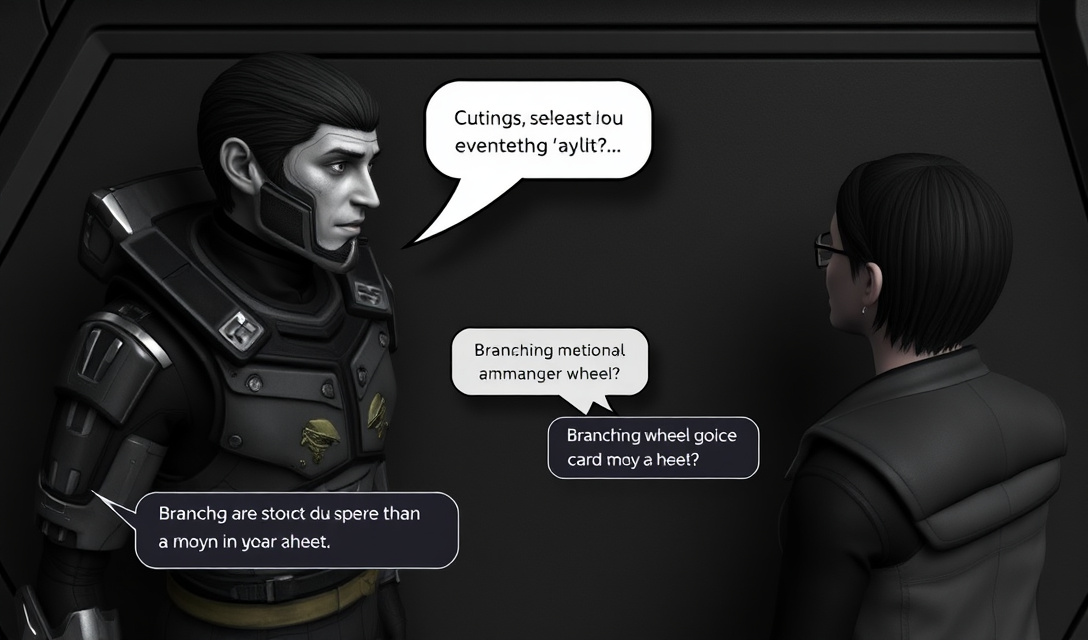
These names recur because the entries being praised usually aren't isolated products — they're franchise touchstones whose reputation rests on what came after them as much as on the game itself. A single Zelda or Mario title gets cited for mechanics that later games across the industry borrowed wholesale, not just for how it played in isolation at launch.
This is also true of series that recur constantly across these rankings without always being named individually — Resident Evil and Mass Effect both show up across nearly every major list, and in both cases the justification given tends to combine two things: the influence a specific entry had on how later games in and outside the series were built, and the strength of its characters and moment-to-moment experience. Survival-horror's fixed camera angles and resource-scarcity tension trace back through Resident Evil's early entries; the dialogue-wheel, choice-consequence structure that a huge number of narrative RPGs now use in some form owes a visible debt to Mass Effect.
That combination — mechanical influence plus a strong standalone experience — is a useful filter for a reader trying to judge whether a game's reputation is earned rather than inherited. A game that only scores well on launch reviews but changed nothing afterward will rank lower on lists that weigh influence; a game that changed the genre but plays roughly by today's standards will often still rank high, because the criterion isn't "does this hold up," it's "did this matter." Knowing which criterion a given list is using tells you whether a high placement is describing quality you'll feel immediately or importance you'll only appreciate with context.
It also explains why franchise-level entries are so hard to compare against single, self-contained games on the same list. A one-off title is judged entirely on its own merits; a long-running series is effectively judged on a rolling average of reputation, where a weak sequel can be forgiven if an earlier entry did enough heavy lifting, and a strong new entry can borrow credibility from games that came out a decade earlier. Neither approach is stated outright on most lists, but noticing which one is happening for a given entry tells you whether "Mass Effect is #7" is a claim about one disc or about a decade of design decisions.
Recent open-world titles like Breath of the Wild and Red Dead Redemption dominate the top of modern lists
Newer open-world games cluster near the top of current best-of lists partly because they're judged against present-day expectations for scope, systems, and production values that older games were never built to meet. A list compiled today is, almost by definition, comparing a game from a decade ago to the technical and design standard of games released last year — and that comparison isn't neutral.
This shows up clearly across the sources: composite and editorial lists get revised as new releases ship, which means a title's position is never fixed — it's a snapshot of where it stands relative to whatever else exists at the moment the list was made. The mathematically derived list IGN maintains is explicit about pulling from many other lists and data points, which means it inherits whatever recency lean those underlying sources already have. A 20-year-old game with genuinely groundbreaking design for its era can look unremarkable next to a modern open-world release simply because the modern release had two more decades of engine and design knowledge to draw on.
Editorial lists show the same pattern for different reasons. When Punished Backlog or Rolling Stone revisit or republish a ranking, the writers doing the ranking are playing (or replaying) older titles with modern reflexes and modern comparison points already loaded into their judgment. That's not a flaw in the writing — it's simply what happens whenever anyone ranks things "of all time" from a fixed present moment. The list isn't lying about the past; it's honestly describing how the past looks from now, which is a different thing than describing how the past looked to the people who lived through it.
The fix isn't to ignore recent titles — it's to compare within a generation rather than across all of them at once. A game's standing among its contemporaries, at the console generation it actually shipped into, tells you something a flattened all-time list can't: whether it was ahead of its moment or simply keeping pace with it. Reading an all-time list without accounting for this means older, formative titles will consistently look worse than their actual historical importance justifies, and it's worth treating any "of all time" ranking as a ranking with an implicit "as measured from right now" attached.
Mass Effect
Mass Effect earns its recurring spot across these lists as a benchmark for choice-driven, narrative science-fiction RPGs — a series where decisions made early carry forward, sometimes across multiple entries, in ways that were unusual for the genre when it debuted. The broader compilation of critically cited best-game lists places it consistently alongside other narrative-heavy titles, and it's cited on staff-driven lists like Seasoned Gaming's for the same reason Resident Evil earns its slot in horror: the series is judged as a whole rather than one installment being isolated from its sequels.
That series-level treatment is worth noticing because it's rarely made explicit. When a list credits "Mass Effect" or "Resident Evil" with a top spot, it's usually not clear whether the entry refers to the original release, the strongest installment critically, or the franchise's accumulated reputation across remasters and sequels. This matters for a reader deciding what to actually play — the game that made the list and the game a store page recommends today (often a remaster or "legendary edition") may differ in scope, difficulty tuning, or even narrative content from the version that earned the original praise. Before assuming a listed title is playable exactly as reviewed, it's worth checking which version — original release, remaster, or definitive edition — is the one actually available on current platforms, since eligibility and version aren't things these lists spell out.
It's also worth separating the critic-side reputation from whatever user score a given entry in the trilogy carries today. A franchise-level placement on a critic or editorial list can sit alongside a much more mixed audience reaction to a specific installment's ending, tone shift, or a later re-release's technical state — the kind of divergence the earlier section on critic-versus-player scores describes in general. Checking both numbers for the specific game you're about to buy, rather than trusting the franchise's overall reputation, avoids assuming every entry in a long-running series is equally well regarded.
If you're weighing whether to start with Mass Effect on the strength of its list placements, treat the ranking as a statement about the franchise's influence on dialogue-driven RPG design broadly, not a guarantee that the specific version sold today matches the exact experience being praised.
Check the platform storefront for the current build before buying, and compare its version notes and current user rating against whichever list convinced you to look in the first place.