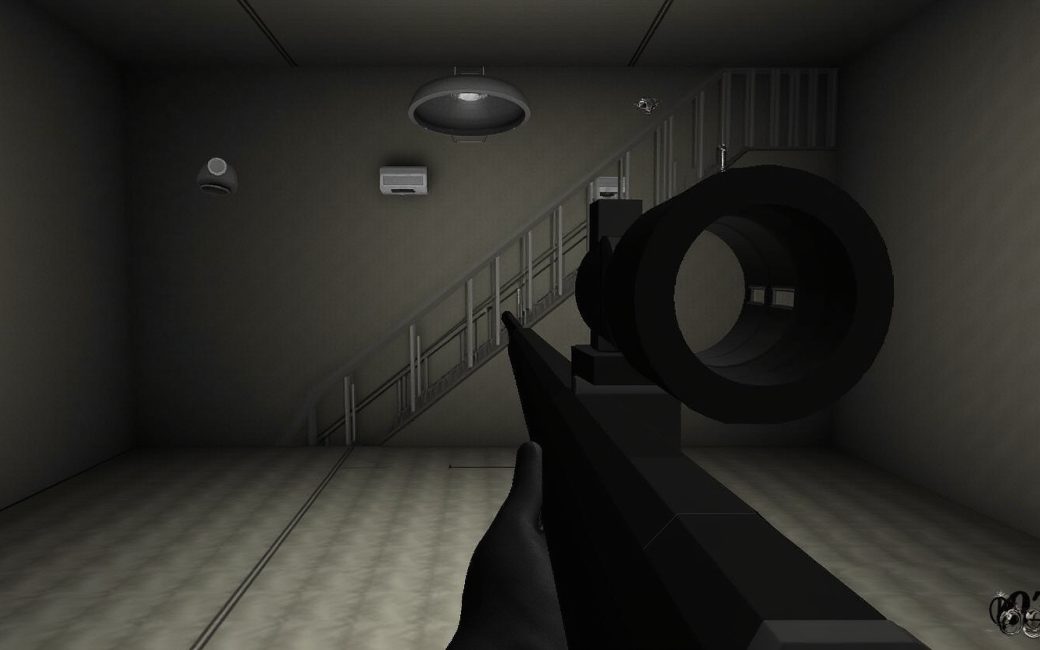
GoldenEye 007 succeeds on Nintendo 64
Rare's 1997 shooter turned a film tie-in into a template every Bond game since has been measured against. GoldenEye 007 put players in first-person, gave them gadget-laden objectives across MI6 missions, and added a split-screen multiplayer mode that outlasted the single-player campaign in most households' memory of it. It wasn't the first Bond game, but it's the one that decided what a Bond game was supposed to feel like going forward.
That decision had consequences. Once a first-person shooter with stealth options and licensed gadgets became the expected shape of a 007 game, later titles were judged against that shape whether or not they were trying to hit it. Electronic Arts picked up the license not long after and built a run of film adaptations around the same broad formula — The World Is Not Enough among them — while also branching into original stories that weren't tied to any film at all, such as Agent Under Fire.
Reviewers at the time and since have judged that EA-era run unevenly. Retrospectives comparing the full run of Bond games tend to put a handful of titles — GoldenEye among them — well above the rest, with the film tie-ins landing anywhere from solid to forgettable depending on how much time the developer had before the film's release date forced the game out the door. That spread is why anyone comparing Bond games keeps arriving back at GoldenEye: it's not nostalgia alone, it's that the games released in its shadow rarely matched it, and the ones that did tended to be the ones that stepped away from adapting a film at all.
A game is tied to a specific Bond film and its release window

Most Bond games through the EA era were built to release alongside a specific film, and that constraint shaped everything else about them. A movie tie-in inherits its plot, its set pieces, and its release date from the film it's adapting — the game has to exist by the time the film hits theaters, whatever state the level design is in.
That timing pressure shows up in the reviews. Retrospective coverage of the series' film adaptations repeatedly flags repetitive missions and rushed pacing as symptoms of a game built against a fixed release date rather than a finished script. A studio adapting Die Another Day or The World Is Not Enough couldn't extend development past the film's theatrical window, so corners that would normally get another pass — level variety, enemy AI, mission structure — often didn't get one.
The games that broke from this pattern did so by dropping the film adaptation altogether. Agent Under Fire and Everything or Nothing weren't tied to any specific movie; they used Bond as a character and a tone rather than a script to follow, which freed their development timelines from a premiere date. That's a large part of why Everything or Nothing and GoldenEye are named together as high points of the series despite being built years and studios apart — neither had to compress a two-hour film into a rushed set of levels on a fixed deadline.
The Bond game licence moves to a new holder
The right to make James Bond games has changed hands multiple times since GoldenEye, and each shift has determined which studio got to define the next era of Bond games. Electronic Arts held the license through most of the early 2000s, publishing both film tie-ins and original stories before the rights eventually moved on, and the franchise's history on video game platforms traces those handoffs publisher by publisher rather than developer by developer — a distinction that matters, because the studio that builds a game isn't always the company that holds the license to make it.
The current holder is IO Interactive, the studio best known for the Hitman series, and it's building something distinct from the pattern EA set: an original Bond story with no film to adapt and no release-date pressure inherited from a movie premiere. That's the same structural freedom that let Everything or Nothing land better than most of its film-tie-in contemporaries, applied at a much larger scale.
That game is 007 First Light, and its PlayStation store listing is currently the clearest official confirmation of what's been announced: a PS5 release, developed by IO Interactive, built around an original narrative rather than an adaptation of an existing film. It answers the "is a new Bond game coming" question directly — yes, one is in development from a named studio, for a named platform — without yet nailing down every detail a buyer would want, which is where the remaining uncertainty actually sits.
James Bond game licence
The license is the legal right to make games based on the character, separate from who actually builds each title. Holding it doesn't mean writing code — EA held the rights for years while contracting different internal and external teams to build individual games, and the current holder works the same way, with IO Interactive attached as developer under whichever rights arrangement currently covers 007 First Light. Readers trying to track "who makes Bond games" get a cleaner answer by asking who holds the license in a given era, then asking which studio that holder assigned to the specific title, rather than treating publisher and developer as interchangeable names for the same thing.
GoldenEye 007 (Nintendo 64)
GoldenEye remains the most referenced Bond game because it set the terms — first-person shooting, gadget use, mission objectives lifted from spycraft rather than straight combat, and a multiplayer mode built almost as an afterthought that ended up defining a console generation's idea of split-screen shooters. It's the fixed point every ranking and retrospective returns to, cited across franchise histories and best-of lists alike as the version of "Bond game" that later titles are measured against, whether or not they were built to match it on purpose.
Electronic Arts Bond era
EA's run, spanning roughly the turn-of-the-millennium film cycle through the mid-2000s, produced most of the series' film adaptations alongside a smaller number of original stories. The tie-ins were constrained by film release dates; the original titles, not having that constraint, are the ones most frequently singled out — Everything or Nothing chief among them — when critics point to the strongest games EA's era produced, per the franchise's documented history.
IO Interactive
IO Interactive, the Hitman developer, currently holds the assignment to build the next major Bond game. Its background in stealth-driven, systems-heavy action design is the reason 007 First Light is being built as an original story rather than another film adaptation — a structural choice that echoes what worked about Everything or Nothing decades earlier, minus the deadline pressure of syncing to a theatrical release, as laid out on the game's official PlayStation listing.
007 First Light
007 First Light is the confirmed upcoming Bond title, listed on the PlayStation store as a PS5 release from IO Interactive. What the listing confirms:
- Platform: PlayStation 5, per the official PlayStation games page
- Developer: IO Interactive
- Story: original, not a film adaptation
What it does not confirm, at least not on that listing, is a specific release date or a full list of every platform beyond PS5. Readers asking whether a 007 game is coming in a specific year should treat that as unconfirmed until a dated release window appears on an official storefront or publisher announcement — the PlayStation listing is the strongest available source right now, and it stops short of a date.
Everything or Nothing
Everything or Nothing is frequently named among the best Bond games precisely because it wasn't built against a film's release date. As a third-person action game with an original plot, it had room to build out mission variety and vehicle sequences that the rushed film tie-ins around it generally didn't, which is why it shows up repeatedly in retrospective rankings such as Collider's assessment of which Bond games hold up as genuinely well-made rather than simply well-timed with a movie release.
The World Is Not Enough (game)
Released on Nintendo 64 and PlayStation not long after GoldenEye, The World Is Not Enough was a film tie-in shooter that inherited GoldenEye's first-person structure without matching its reception. It's frequently cited in historical rundowns of the series as the clearest example of a game trying to repeat a formula it didn't have the development time or team continuity to fully replicate — a pattern that recurs across most of the film-adaptation era.
Agent Under Fire
Agent Under Fire, from the EA era, is a non-film original Bond shooter — Bond as a character without a specific movie plot to adapt. Reviews at the time treated it as a competent but unremarkable entry, notable mainly for showing that dropping the film-adaptation constraint didn't automatically produce a better game; per period coverage collected in retrospective review round-ups, execution mattered as much as structural freedom.
Is there going to be a James Bond video game?
Yes — 007 First Light is in active development from IO Interactive and listed on the PlayStation store as a PS5 title, which is the clearest confirmation currently available. What isn't confirmed by that listing is a release date or a full platform list beyond PS5, so any claim naming a specific 2026 date or a full cross-platform rollout should be treated as unverified until an official source states it directly.
For the "how many Bond games exist" question, the honest answer depends on what counts. A chronological rundown of the franchise's video game history lists console, PC, and handheld entries across multiple decades and multiple publishers, and the total shifts depending on whether mobile spin-offs, PC-only releases, and later remasters are counted alongside the console mainline. Anyone quoting a single number for "how many James Bond games there are" should be quoting it alongside the rule they used to count them — mainline console titles only, or every platform and re-release together — because those two counts land in very different places.
Where to actually play the older games now
Playing GoldenEye today means confronting a licensing history that hasn't been fully resolved. GoldenEye 007 was rereleased for Nintendo Switch Online and Xbox Game Pass members through a licensing arrangement that made the original N64 build playable on modern hardware, rather than a remaster or remake with updated visuals — it's the same game running through an emulation layer, not a rebuilt version. That distinction matters for anyone expecting a modernized experience: nothing officially released has rebuilt GoldenEye's assets or mechanics from the ground up, so "playing GoldenEye now" currently means the original build, not a remake.
Most of the EA-era tie-ins, by contrast, never received a modern re-release at all. Titles like The World Is Not Enough and Agent Under Fire remain tied to their original console generation unless a player has kept the original hardware or disc, since no publisher has issued a current-gen port. Everything or Nothing sits in the same position — praised in retrospectives but not readily available through any modern storefront. Anyone trying to build a personal Bond-games backlog should expect to track down original hardware for most of the pre-2010 catalog, with GoldenEye being the one clear exception via its subscription-service rerelease.
What to watch for next
The clearest next confirmation to look for is a dated release window for 007 First Light beyond its current PS5 listing, along with any statement of additional platforms. Checking the official PlayStation game page directly, rather than secondary coverage, is the most reliable way to catch that update as soon as it's posted — publisher storefronts tend to update ahead of general news coverage picking it up.